Hanlin Ma 马翰林
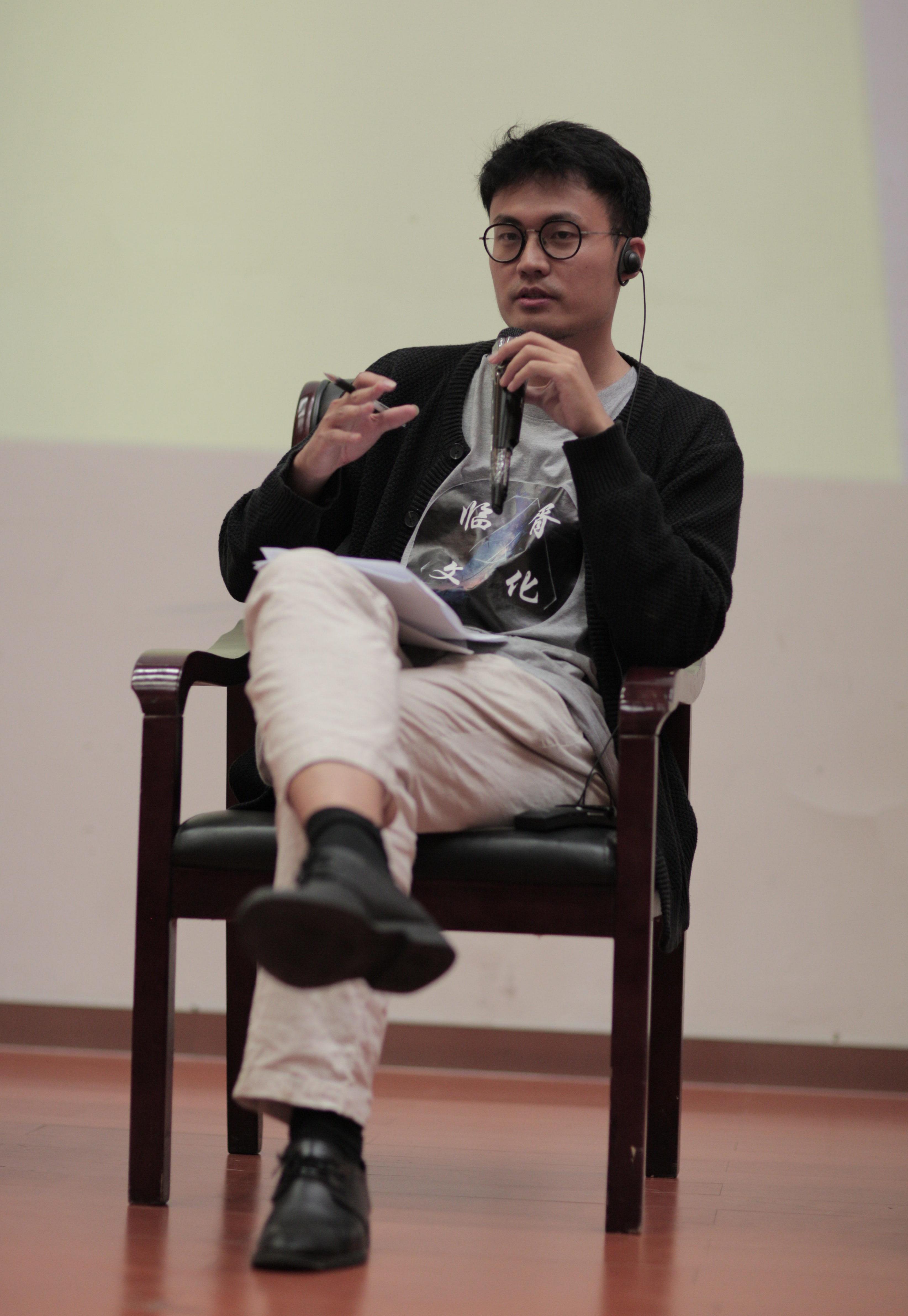
Hanlin Ma is Associate Professor in the School of Marxism at Suzhou University of Science and Technology. His work focuses on philosophy of science and technology, ethics, cognitive science, philosophy of technology, and contemporary debates surrounding artificial intelligence.
This site presents selected publications, lectures, notes, and teaching-related materials. It is intended as a concise academic record and will be updated as new work becomes available.
Recent Updates
- Empathy as a Second-Person Standpoint / 作为第二人称观点的同理心 · March 19, 2026
- Care as a Concept-Mediated Relationship / 关怀:以概念为中介的关系 · March 18, 2026
- Freedom and the Evolution of Care / 自由与关怀的演化 · March 17, 2026
- Adaptive Virtue and the Aim of Care Education / 关怀教育的宗旨 · March 16, 2026
- Care Education and Critical Thinking / 关怀教育与慎辨性思维 · March 15, 2026
- Positive Psychology and Caring Practice / 积极心理学与关怀实践 · March 14, 2026
- Care and the Four Quotients / 关怀教育与四商 · March 13, 2026
- What Makes Halt Possible? The Significance for AGI of a Halt Mechanism with the Data "Market" as an External Constraint · August 9, 2023
Recent Writing
- Empathy as a Second-Person Standpoint / 作为第二人称观点的同理心March 19, 2026
Part I of this bilingual series, adapted from *Life-Care Education Based on Improved Mental Models*, Chapter 8, Section 1. The English column is an AI translation revised for student readers; this part focuses on empathy, Hume, Singer, and the case for a second-person account.
- Care as a Concept-Mediated Relationship / 关怀:以概念为中介的关系March 18, 2026
Part II of this bilingual series, adapted from *Life-Care Education Based on Improved Mental Models*, Chapter 8, Section 2. The English column is an AI translation revised for student readers; this part discusses Noddings, relational feedback, and the structure of care.
- Freedom and the Evolution of Care / 自由与关怀的演化March 17, 2026
Part III of this bilingual series, adapted from *Life-Care Education Based on Improved Mental Models*, Chapter 8, Section 3. The English column is an AI translation revised for student readers; this part addresses how care evolves with changing relationships and practical freedom.
Publications
- Meaning of Life and One HealthRenzong Qiu, Meijun Yang, Jiahai Lu, Yuanyuan Zhang, Hanlin Ma · 2024
- Bringing Web 3.0 and DAO into Democratic Class: A Study of Pedagogy in Higher EducationHanlin Ma, L. Li, Y. Wu, J. Wang · 2023
Blockchain technology introduces a paradigm shift into higher education, presenting opportunities for innovative transformations in human organization and democratic operations. Education-based Decentralized Autonomous Organizations (DAOs) on Web 3.0 are anticipated to instigate change across the spectrum, from classroom pedagogy to broader educational systems. Our research concentrates on the micro-level exploration of the merger between the decentralization principles of educational DAOs and traditional democratic classrooms. In the course of our experimental study, we analyze an experimental postgraduate course that uses a governing token to stimulate decision-making processes, empowering students with a participatory role that mirrors DAO operations. The implementation of popular DAO tools is discussed with the goal of crafting a classroom environment reflecting the decentralized decision-making structures intrinsic to DAOs. While we underscore the potential of decentralized teaching methodologies to enhance democratic education, we particularly focus on students as the primary facilitators of collective decision-making. According to our investigation, students showed a greater understanding and positivity towards decentralization than expected, suggesting that a suitable environment could boost positive behavior in class. Furthermore, in an architecturally decentralized class, a properly operational tokenomics could enhance classroom liberty, particularly for elite students, who might exert significant influence due to tokenomics and reward mechanisms.
- Cyberpunk and Cypherpunk: A Philosophical Analysis Comparing Two Views of the MetaverseHanlin Ma · 2022
As ancestors of the idea of the metaverse - Cyberpunks and Cypherpunks - propose two distinct attitudes towards Cyberspace, and this difference also infuses their attitudes towards the metaverse. These two attitudes will powerfully influence the developmental direction of the metaverse and how it will be recognized and accepted by society. Given that the visual space is an artificial reality created by technology, they not only illustrate two different ideas regarding "realities other than the physical one of human society", but also illustrate two different ideas regarding technology itself. The Cyberpunk view of the metaverse could be seen as techno-pessimistic or Luddism. Cypherpunk's metaverse view, on the other hand, is "technological transformationism", which carries multi-possibilities of living styles of human being, and it almost incompatible with Luddism.